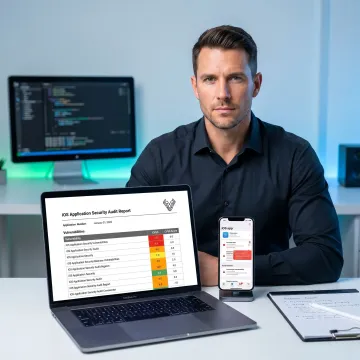
iOS pentesting is a security assessment focused on identifying vulnerabilities in iPhone and iPad applications. It typically includes static analysis, dynamic testing, reverse engineering, local storage review, authentication and session testing, certificate validation checks, and backend API analysis. The goal is to find exploitable weaknesses before release and provide clear remediation guidance that improves application security and user trust.
What is mobile application penetration testing?
Mobile application penetration testing is a structured security evaluation of mobile apps and their supporting services. It examines the app itself, device-side data handling, runtime behavior, network communications, authentication flows, and connected APIs or cloud backends. For iOS apps, this helps uncover issues such as insecure storage, weak transport security, broken authorization, and business logic flaws that automated scans may overlook.
What vulnerabilities are commonly found in iOS apps?
Common iOS app issues include insecure local data storage, weak authentication flows, improper session handling, insufficient certificate validation, exposed secrets, insecure API trust, authorization flaws, and business logic abuse. Testing may also uncover jailbreak detection weaknesses, sensitive information leakage in logs, and risky backend integrations. A thorough assessment validates whether these issues are actually exploitable and how severe the impact could be.
Does iOS app penetration testing include backend API testing?
Yes, effective iOS app penetration testing should include backend API testing because mobile security often depends on server-side controls. Assessors review authentication, authorization, token handling, input validation, rate limiting, data exposure, and privilege escalation paths. This is important because a secure-looking app can still be compromised if its APIs allow broken object-level authorization, excessive data exposure, or weak access controls.
How is iOS pentesting different from automated scanning?
Automated scanning is useful for identifying known patterns, but it often misses business logic flaws, chained attack paths, and context-specific authorization issues. iOS pentesting adds manual analysis of workflows, runtime behavior, trust boundaries, and real attack scenarios. This deeper approach helps validate exploitability, reduce false positives, and produce findings that are more relevant to developers, product teams, and compliance stakeholders.
When should an organization schedule iOS app penetration testing?
The best time is before major releases, after significant feature changes, before compliance audits, and whenever authentication, payments, or sensitive data handling changes. Many teams also test before App Store submission for high-risk applications. Scheduling assessments during staging or pre-production allows time to remediate findings without delaying launch, while periodic retesting helps confirm fixes and maintain a stronger security posture over time.
What do we receive after the assessment?
You typically receive a detailed report with validated findings, severity ratings, proof-of-concept evidence, affected components, business impact, and prioritized remediation guidance. Strong providers also include an executive summary for stakeholders and technical detail for developers. Vynox Security’s approach emphasizes actionable reporting and fast remediation support so teams can address meaningful risks efficiently rather than sorting through vague or noisy results.
Can iOS app penetration testing help with compliance efforts?
Yes, iOS app penetration testing can support compliance initiatives such as SOC 2, ISO 27001, and GDPR by identifying security gaps, validating controls, and documenting remediation efforts. While pentesting alone does not guarantee certification, it provides evidence that your organization is actively assessing application risk. It is especially valuable for apps handling personal data, financial information, or sensitive business workflows.