
Introduction
Cyberattacks are no longer a question of if — they're a question of when. According to IBM's Cost of a Data Breach Report 2024, the global average cost of a data breach reached $4.88 million in 2024 — a 10% jump from the previous year and the largest single-year increase since the pandemic era. US organizations averaged $9.36 million per breach.
Yet many businesses still lack the one practice that directly reduces that exposure: a regular network security audit. A well-executed audit finds the gaps attackers would exploit — before they get the chance.
This guide walks you through what a network security audit is, the different types, a step-by-step process for conducting one, what the final report should include, and the common mistakes that undermine audit effectiveness.
TL;DR
- A network security audit is a structured review of your IT infrastructure to find vulnerabilities, assess controls, and verify compliance.
- There are three main types: penetration testing audits, compliance audits, and configuration/internal audits.
- The process follows 7 steps, from scoping to remediation, and should be repeated at least annually.
- An effective audit report includes an executive summary, technical findings, a compliance gap analysis, and a prioritized remediation roadmap.
- The most common mistake organizations make is treating audits as a compliance checkbox rather than a real risk exercise.
What Is a Network Security Audit?
A network security audit is a structured, independent evaluation of an organization's IT network infrastructure: hardware, software, configurations, and security policies. The goal is to uncover vulnerabilities, assess risk, and verify that controls are actually working.
The NIST Computer Security Resource Center defines a security audit as: "Independent review and examination of a system's records and activities to determine the adequacy of system controls, ensure compliance with established security policy and procedures, detect breaches in security services, and recommend any changes that are indicated for countermeasures."
What Gets Evaluated
A network security audit typically covers:
- Firewall and router configurations — rules, exceptions, and expired policies
- Access controls and user permissions — who has access to what, and whether it's appropriate
- Patch and firmware status — known vulnerabilities left unaddressed
- Network segmentation — whether sensitive systems are properly isolated
- Encryption practices — data in transit and at rest
- Monitoring capabilities — logging, alerting, and detection coverage
Audit vs. Vulnerability Scan vs. Penetration Test
These three activities are often confused — but they serve different purposes:
| Activity | Purpose | Approach |
|---|---|---|
| Security Audit | Evaluates governance and control effectiveness | Reviews policies, configurations, and records |
| Vulnerability Scan | Identifies known technical weaknesses | Automated, signature-based scanning |
| Penetration Test | Validates whether weaknesses are exploitable | Manual, adversarial simulation |
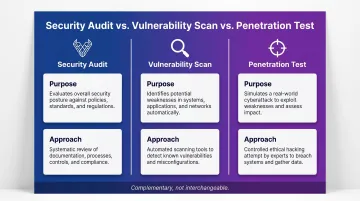
They're complementary, not interchangeable. A vulnerability scan tells you what might be broken. A penetration test tells you what an attacker can actually do with it. An audit tells you whether your controls and governance hold up to scrutiny.
Who Conducts Audits — and How Often
Internal teams bring context and institutional knowledge but carry the risk of familiarity bias — it's harder to spot what you've stopped noticing. External auditors bring objectivity, specialized expertise, and independence, making them the preferred choice for compliance-driven reviews.
Organizations should conduct a formal audit at least once per year. Additional reviews are warranted after major infrastructure changes, new compliance obligations, or a security incident.
Regulated industries face specific requirements:
- PCI DSS: quarterly vulnerability scans and annual penetration tests
- SOC 2 Type II: annual audits
- ISO 27001: annual internal audits
Types of Network Security Audits
Penetration Testing Audit
A penetration testing audit goes beyond configuration review. It actively simulates real-world attack scenarios to find weaknesses that are genuinely exploitable — not just theoretically present.
The process typically follows four stages:
- Reconnaissance — asset discovery and threat modeling
- Assessment — manual and automated vulnerability testing
- Validation — proof-of-concept development and impact analysis
- Reporting — actionable remediation guidance with clear severity ratings
The critical distinction is the manual component. Automated scanners operate on predefined rules and known signatures — they cannot reason about business context. Multi-step attack chains, privilege escalation sequences, and business logic flaws (such as a workflow that allows a lower-privileged user to approve their own transactions) return standard HTTP responses that automated tools classify as valid.
Vynox Security was founded specifically around this observation: that organizations relying on automated scans were left with a false sense of security because critical attack chains and authorization gaps went undetected. Their manual-first approach surfaces exactly those vulnerabilities, delivering 3× deeper coverage than tool-only scans.
Compliance Audit
A compliance audit verifies whether an organization's security controls meet specific regulatory or industry standards. Common frameworks include:
- SOC 2 — requires annual Type II audits demonstrating operational effectiveness of controls
- ISO 27001 — requires internal audits and triennial certification reviews
- PCI DSS — mandates quarterly ASV scans and annual penetration tests
- GDPR — Article 32 requires regular testing of technical and organizational measures
- HIPAA — mandates periodic technical evaluations of security safeguards
Findings from a compliance audit directly determine what remediation is required to avoid legal or financial penalties. Vynox Security supports readiness for all five frameworks, producing compliance-ready reports mapped to each standard's specific control requirements.
One important caveat: research published in the Journal of Management Information Systems found that for mature organizations, compliance alone has no measurable impact on breach prevention. Compliance sets the floor — but a genuine security posture requires testing whether those controls hold under actual adversarial conditions.
Configuration and Internal Audit
Configuration audits focus on device settings, firewall rule sets, and access control policies — identifying misconfigurations, overly permissive rules, and outdated settings. IBM's 2024 data found that misconfigured cloud settings were responsible for 19% of all breaches, and Gartner projects that 99% of cloud security failures through 2025 will be customer-caused.
Internal audits assess whether the organization is actually following its own documented security policies — patch schedules, password policies, remote access procedures. Together, they establish the configuration baseline that shapes the scope and priority of any subsequent penetration test.
How to Conduct a Network Security Audit: 7 Key Steps
Step 1: Define Scope and Objectives
Scope determines which network segments, environments (on-premises, cloud, remote access), systems, and compliance frameworks are included. Poorly scoped audits leave entire environments unchecked — a common problem when cloud and remote access pathways are excluded.
Objectives should be specific: compliance validation, risk reduction, or control effectiveness testing. Without clear objectives, findings tend to be just as unfocused — and harder to act on.
Step 2: Build a Complete Asset Inventory
Catalog everything:
- Hardware — routers, switches, servers, endpoints, IoT devices
- Software — operating systems, security tools, cloud instances, SaaS applications
- Data flows — where sensitive data moves and where it resides
The IBM 2024 breach report found that 35% of breaches involved shadow data — assets not properly inventoried or classified, making them invisible to security controls. If an asset isn't in your inventory, it won't be assessed, patched, or monitored — which is exactly what attackers count on.
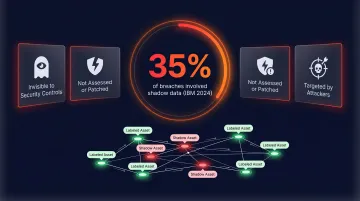
A visual network diagram helps map segmentation boundaries and dependencies, making gaps immediately apparent.
Step 3: Review Security Policies and Configurations
Auditors examine:
- Firewall rule sets for disabled, expired, or over-permissive rules
- Network segmentation policies and VLAN configurations
- Encryption settings for data in transit and at rest
- Patch and firmware update status across all managed devices
- Documented procedures — password policies, remote access controls, change management
Step 4: Assess Access Controls and Identity Management
This step evaluates how access is granted, managed, and revoked:
- Is role-based access control (RBAC) enforced consistently?
- Is multi-factor authentication (MFA) implemented? CISA confirms MFA makes accounts 99% less likely to be compromised.
- Is the principle of least privilege applied — or do users hold far more access than their roles require?
- Are privileged accounts properly governed, monitored, and reviewed?
Over-permissive access is one of the most common and consequential findings in any network audit.
Step 5: Conduct Vulnerability Scanning and Penetration Testing
Automated scanners provide breadth — they cover a network environment quickly and identify known CVEs across devices and systems. Penetration testing provides depth, simulating real attack techniques to validate whether identified weaknesses are actually exploitable.
The combination is what makes this step meaningful. A vulnerability scan flags a misconfigured service; a penetration test determines whether that misconfiguration enables lateral movement, credential theft, or data exfiltration — and by what path.
Step 6: Evaluate Monitoring and Incident Response Readiness
Auditors assess detection and response capabilities:
- Is logging enabled across critical devices and systems?
- Are intrusion detection systems (IDS) properly configured and generating actionable alerts?
- Does the organization have a documented incident response plan — and has it been tested?
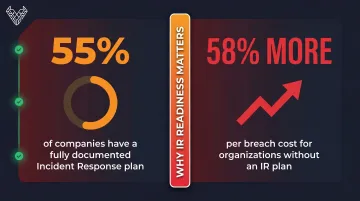
Only 55% of companies maintain a fully documented incident response plan — and organizations without one pay an average of 58% more per breach. Audits that stop at preventive controls miss half the picture.
Step 7: Document Findings, Prioritize Risk, and Remediate
All findings should be:
- Categorized by severity using CVSS v4.0 — the current industry standard with five levels: None, Low, Medium, High, and Critical
- Tied to specific business impact, not just technical description
- Organized into a prioritized remediation roadmap that distinguishes quick wins from longer-term architectural changes
Without structured follow-up, the audit is just a document. Track fixes, verify remediation, and schedule the next review cycle before the current one closes.
What Should a Network Security Audit Report Include?
A well-structured report serves two audiences: leadership needs clarity on risk and posture; the security team needs enough technical detail to act.
The four core components:
1. Executive Summary Communicates key risk findings and overall security posture in non-technical language. Leadership should be able to read this section and understand where the organization stands without interpreting raw technical data.
2. Technical Findings Each vulnerability or control gap documented with:
- Location within the infrastructure
- Severity rating (CVSS v4.0)
- Evidence and proof-of-concept
- Potential business impact
Organized so the security team can triage the most critical issues first.
3. Compliance Gap Analysis Maps findings to relevant regulatory frameworks — SOC 2, ISO 27001, GDPR, PCI DSS — and identifies which specific controls are non-compliant and what's required to close each gap.
4. Remediation Roadmap Prioritized and specific, with assigned ownership and realistic timelines. The roadmap separates immediate fixes from longer-term work so teams can act without translating the findings first.
Vynox Security structures every report to be usable by both teams: executive summaries that hold up in board-level conversations, and technical sections mapped to OWASP, ISO 27001, and NIST that security engineers can act on the same day they receive them.
Benefits and Common Challenges of Network Security Audits
Key Benefits
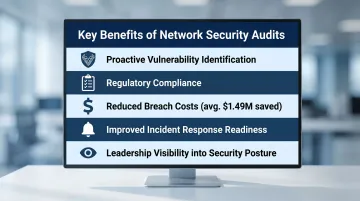
- Proactive vulnerability identification before attackers find what you missed
- Regulatory compliance across SOC 2, ISO 27001, GDPR, HIPAA, and PCI DSS
- Reduced breach costs — IBM's data shows organizations with regular IR plan testing save an average of $1.49 million per incident
- Improved incident response readiness with tested, documented procedures
- Leadership visibility into the actual security posture — not a theoretical one
Common Mistakes That Reduce Effectiveness
- Treating the audit as a compliance checkbox rather than a genuine risk exercise
- Scoping audits to on-premises systems while cloud and remote access pathways go unexamined — IBM puts the average public cloud breach at $5.17 million
- Auditing too infrequently and missing the gaps that accumulate between reviews
- Failing to act on findings after the report is delivered
When an External Partner Makes Sense
Internal teams often carry blind spots that limit how deep an audit can go:
- Familiarity bias toward systems they built or inherited
- Resource constraints that force trade-offs on scope
- Competing operational priorities that compress review timelines
External partners bring independence, specialized expertise, and the objectivity that compliance-driven reviews require.
Vynox Security has completed 200+ security assessments across 8+ countries, working with finance, SaaS, and cloud-native organizations to close real security gaps and satisfy compliance requirements including SOC 2, ISO 27001, and GDPR. In one engagement, a SaaS company preparing for ISO 27001 certification uncovered critical gaps through Vynox's assessment — unpatched software, weak cloud configurations, and overly permissive access controls. After remediation, they passed their certification audit with zero non-conformities.
Frequently Asked Questions
What is a network security audit?
A network security audit is a structured, independent evaluation of an organization's IT network infrastructure — covering hardware, software, configurations, and governance policies — to identify vulnerabilities, assess risk, and verify compliance with applicable regulatory standards.
What are the 7 steps in the audit process?
- Define scope and objectives
- Build a complete asset inventory
- Review security policies and configurations
- Assess access controls and identity management
- Conduct vulnerability scanning and penetration testing
- Evaluate monitoring and incident response readiness
- Document findings with a prioritized remediation roadmap
What should a network security audit report include?
An effective report covers four components:
- Executive summary of overall risk posture
- Technical findings categorized by severity using CVSS v4.0
- Compliance gap analysis mapped to relevant frameworks
- Remediation roadmap with specific actions and ownership
What are the 5 principles of network security?
The five foundational principles are: confidentiality (restricting data access to authorized users only), integrity (ensuring data isn't tampered with), availability (keeping systems operational), authentication (verifying user identity), and non-repudiation (ensuring actions can be attributed and logged).
What are the 4 types of audit report?
The four common types are: unqualified (clean pass), qualified (pass with noted exceptions), adverse (significant non-compliance found), and disclaimer (auditor unable to form an opinion due to scope limitations).