That gap between what organizations assume about their defenses and what actually exists is exactly what a security posture assessment is designed to close.
This guide covers what a security posture assessment is, what it evaluates, how to run one step-by-step, and how to act on the findings once you have them.
TL;DR
- A security posture assessment evaluates your organization's overall ability to prevent, detect, and respond to cyber threats — covering people, processes, policies, and technology.
- Unlike a vulnerability scan, it examines governance, access controls, compliance alignment, and human factors.
- The process follows six phases: scoping, asset inventory, control evaluation, penetration testing, risk analysis, and remediation planning.
- Automated tools miss business logic flaws and chained attack paths; manual-first testing delivers 3× deeper coverage.
- Assessments should run annually at minimum, and after any major infrastructure change or security incident.
What Is a Security Posture Assessment?
NIST defines security posture as "the security status of an enterprise's networks, information, and systems based on information security resources — people, hardware, software, policies — and capabilities in place to manage the defense of the enterprise and react as the situation changes."
A security posture assessment is an organization-wide evaluation of how effectively your controls, policies, processes, and people work together to defend against real-world threats.
How It Differs from a Vulnerability Assessment
Many teams use these terms interchangeably, but they serve distinct purposes:
| Aspect | Security Posture Assessment | Vulnerability Assessment |
|---|---|---|
| Scope | Organization-wide (people, process, tech) | Technical systems only |
| Objective | Measure overall security readiness | Identify specific technical weaknesses |
| Frequency | Annual + after major changes | Quarterly or continuous |
| Outcome | Prioritized risk and remediation roadmap | List of CVEs and technical findings |
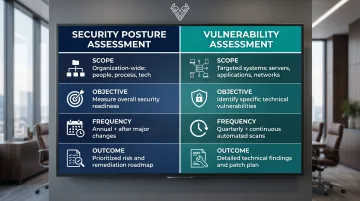
A vulnerability assessment surfaces specific technical weaknesses. A security posture assessment answers a harder question: is your organization genuinely prepared to handle threats, including attack paths that no automated scan will flag?
When Should You Conduct One?
Four situations call for an assessment:
- After a breach or security incident — to understand root cause and close gaps
- During major business changes — cloud migrations, mergers, new technology adoption
- Before compliance audits — SOC 2, ISO 27001, GDPR preparation
- As part of annual security planning — proactive baseline measurement
Key Elements of a Security Posture Assessment
A thorough assessment examines multiple security domains. Together, they surface the attack paths, control gaps, and policy failures that no single scan can reliably detect.
Network and Infrastructure Security
Assessors review firewall configurations, open ports, network segmentation, patch status, and intrusion detection systems. Poor segmentation and misconfigured firewalls are among the most consistently exploitable weaknesses found in real-world assessments.
The scale of that risk is measurable. According to Palo Alto Networks Unit 42's 2024 Incident Response Report, 75% of ransomware attacks resulted from internet-facing exposure — misconfigured or unpatched systems that were reachable from the public internet.
Identity and Access Management (IAM)
IAM evaluation examines overprivileged accounts, MFA enforcement gaps, dormant accounts, and user lifecycle failures. This domain deserves particular attention: stolen credentials were the initial access vector in 38% of all breaches in 2024, according to Verizon's DBIR. Worse, credential-based breaches take nearly 10 months to identify and contain on average — making them among the costliest attack vectors.
Compromised accounts with excessive access enable lateral movement across the entire network. A good assessment maps exactly which accounts have excessive permissions, then prioritizes reducing that exposure before an attacker exploits it.
Endpoint and Device Protection
Assessors evaluate endpoint protection platforms, patch consistency across laptops, mobile devices, and servers, and configuration baselines. Remote and hybrid work environments have expanded this attack surface considerably — and the numbers reflect it. Absolute Security's 2026 Resilience Risk Index found that endpoint security software fails to protect devices approximately 21% of the time, leaving enterprise PCs vulnerable for an average of 76 days per year.
Cloud and Application Security
For cloud-native organizations, the attack surface is almost entirely cloud-based. Assessments examine:
- Publicly exposed storage buckets (S3, Azure Blob, GCP Cloud Storage)
- Insecure API configurations and overpermissioned service accounts
- Weak cloud IAM policies and missing MFA for admin/root users
- SaaS application security and CSPM alignment
65% of cloud security incidents stem from misconfigurations, according to Unit 42 research. These misconfigurations rarely trigger alerts — they sit quietly until an attacker finds them first.
Governance, Compliance, and Human Factors
This layer covers three areas that assessments often underweight:
- Policy review: incident response plans, data handling procedures, access control policies
- Compliance alignment: SOC 2, ISO 27001, GDPR, and similar frameworks
- Employee security awareness: phishing susceptibility, security training gaps, reporting culture
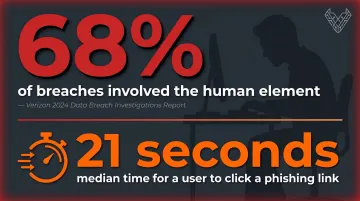
The Verizon 2024 DBIR found that the human element contributed to 68% of breaches. The median time for a user to click a phishing link was 21 seconds. Human error is not a soft problem — it's a critical control gap that a posture assessment must measure directly.
How to Conduct a Security Posture Assessment: Step-by-Step
Rushing any phase, particularly testing and analysis, produces shallow findings and incomplete remediation plans. Here's how a real-world assessment is structured.
Step 1 – Define Scope and Objectives
Specify which systems, environments (on-premise, cloud, third-party), and data types are in scope. A clearly defined scope prevents both under-coverage and scope creep, and ensures assessment effort is concentrated on the organization's highest-risk areas. Scope decisions should be driven by business impact, not convenience.
Step 2 – Inventory and Classify Assets
Catalog all digital and physical assets: servers, endpoints, databases, applications, cloud services, and IoT devices. Classify each by business criticality. This prioritization determines where the most stringent controls should be applied, and where a breach would cause the most operational damage.
Step 3 – Evaluate Existing Security Controls and Policies
Review deployed controls (firewalls, endpoint protection, encryption, MFA) alongside documented policies (incident response, data classification, access management). The critical question isn't just what policies exist — it's whether those policies are actually enforced. The gap between documented and practiced security is one of the most common and dangerous findings.
Step 4 – Conduct Vulnerability Scanning and Penetration Testing
Run automated vulnerability scans to identify known weaknesses, then layer in manual penetration testing to validate exploitability and test for attack paths that tools routinely miss. OWASP's Web Security Testing Guide states directly that "automation of business logic abuse cases is not possible and remains a manual art relying on the skills of the tester."
Chained attack scenarios, where multiple lower-severity findings combine into a critical risk, are invisible to scanners. Vynox Security's manual-first, threat-led approach is specifically designed to surface these paths — the kind of depth a genuine security posture assessment requires.
Step 5 – Analyze Risk and Prioritize Findings
Score each finding by combining the likelihood of exploitation with potential business impact. Prioritize:
- Critical/High: Externally exposed assets, sensitive data access, privileged accounts
- Medium: Internal systems with limited exposure or compensating controls
- Low: Informational findings with minimal exploitability
Avoid treating all findings with equal urgency. That mistake slows remediation of the most dangerous issues while teams chase lower-risk items.
Step 6 – Report Findings and Build a Remediation Plan
Produce a structured report containing:
- Executive summary : business risk in plain language
- Technical findings : categorized by severity with evidence
- Root cause analysis : why the vulnerability exists, not just what it is
- Remediation roadmap : prioritized actions with assigned owners and target timelines
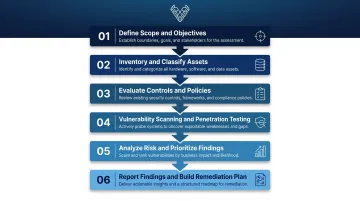
A report without a remediation plan is an incomplete assessment. The findings are only valuable if they drive change.
Common Vulnerabilities Uncovered During a Security Posture Assessment
Every environment is different, but certain weaknesses appear consistently across assessments. The Verizon 2024 DBIR documented a 180% year-over-year increase in attacks exploiting vulnerabilities, driven largely by zero-day exploitation. Stolen credentials remain the most common initial access method.
The most frequently found issues include:
- Misconfigured firewalls and cloud settings — open ports, overly permissive security groups, publicly accessible storage
- Weak or reused passwords with absent MFA — particularly on admin and cloud console accounts
- Excessive user privileges and unmanaged accounts — legacy service accounts, former employee credentials still active
- Unpatched or outdated software — the average time to fix a vulnerability now exceeds 252 days
- Encryption gaps — sensitive data in transit or at rest without enforced encryption controls
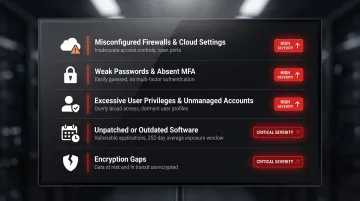
Automated scanning won't surface all of these. Misconfigured access policies and chained attack paths — where two or three medium-severity findings combine into a critical exposure — only emerge through manual analysis. That distinction matters when prioritizing remediation: a standalone medium finding may sit in a backlog for months, while the same finding as part of a chain needs immediate attention.
Best Practices to Strengthen Your Security Posture After Assessment
An assessment is only valuable if findings drive action. Posture improvement is an ongoing discipline, not a one-time project.
Enforce Least Privilege and Harden Access Controls
Start with role-based access control (RBAC) and MFA across all accounts — cloud console, admin, and service accounts alike. Then make access hygiene a recurring habit:
- Run quarterly reviews to revoke stale or excess permissions
- Flag dormant accounts automatically and disable on a defined schedule
- Restrict admin privileges to named individuals, not shared credentials
Every dormant account with broad privileges is an open door waiting to be used.
Automate Patch Management and Configuration Monitoring
Deploy automated patch management to close the gap between vulnerability disclosure and remediation. Pair it with configuration drift monitoring so deviations from hardened baselines are flagged before they become exploitable. Given that the average time-to-exploit dropped to just 5 days in 2023 according to Google Mandiant, speed of patching directly determines exposure.
Invest in Continuous Security Awareness Training
Annual security training isn't sufficient. KnowBe4's research across 60,000+ organizations found that weekly phishing simulations were 2.74× more effective at reducing risk than quarterly tests. Organizations that ran combined training and simulated phishing saw phish-prone rates drop from 34.3% to 4.6% over 12 months. Frequency and scenario specificity are what drive behavior change.
Shift from Annual Assessments to Continuous Posture Monitoring
Training addresses the human layer. On the technical side, the same logic applies: a point-in-time assessment captures a snapshot, but cloud and SaaS environments change daily — new services spun up, configurations modified, new accounts created.
Continuous monitoring provides real-time visibility into asset inventory, vulnerability status, and control effectiveness. That way, the security baseline established during an assessment doesn't silently erode between review cycles.
How Vynox Security Can Help
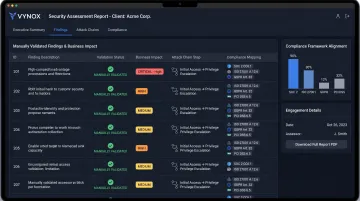
Vynox Security was built specifically to address the gap that automated tools leave behind. The company's founding was rooted in a recurring observation: organizations relying on automated scans and checkbox-driven assessments were consistently missing critical business logic flaws, authorization gaps, and chained attack paths — leaving them with a false sense of security.
With 10+ years of experience and 200+ assessments completed, Vynox brings a manual-first, threat-led methodology that delivers 3× deeper coverage than tool-only approaches. Their team has uncovered 5,000+ vulnerabilities across 500+ tested applications.
Every finding is manually validated — zero false positives, no noise, just what actually matters.
Here's what that looks like in practice:
- Assessors map realistic attack chains and business logic flaws, not just known CVEs
- Findings are ranked by actual business impact — not raw CVSS score
- Retesting and validation are built into every engagement, with responses under 24 hours
- Reports map directly to SOC 2, ISO 27001, GDPR, and PCI DSS controls for audit-ready use
Vynox also offers Managed Security Services (MSS) for organizations that want continuous posture monitoring beyond a point-in-time engagement. MSS delivers ongoing visibility, remediation tracking, and threat intelligence integration — so your posture doesn't stall between assessments.
Whether you're preparing for your first SOC 2 audit or managing compliance across multiple frameworks, contact Vynox Security to scope an assessment built around your actual risk — not a generic checklist.
Frequently Asked Questions
What is a security posture assessment?
A security posture assessment is a comprehensive evaluation of an organization's overall cybersecurity readiness — covering its controls, policies, processes, and people. It identifies gaps, measures resilience against real-world threats, and produces a prioritized roadmap for improvement.
What is the scope of a security posture assessment?
Scope typically includes on-premise infrastructure, cloud environments, endpoints, applications, third-party integrations, IAM, policies, and employee awareness. The exact scope is defined at the outset based on the organization's risk profile, regulatory requirements, and business priorities.
How do you measure security posture?
Security posture is measured through vulnerability metrics, control coverage rates, compliance alignment scores, incident response metrics (mean time to detect and contain), and penetration testing findings. Most organizations use a weighted scoring model to produce an overall posture score tracked over time.
What are the 7 steps of a standard security risk assessment model?
The NIST Risk Management Framework outlines seven steps: Prepare, Categorize, Select, Implement, Assess, Authorize, and Monitor — though exact labels vary slightly across frameworks like ISO 27005.
What are the three main types of security assessments?
The three core types are: vulnerability assessment (automated scanning for known technical weaknesses), penetration testing (simulated attacks that validate exploitability and test attack chains), and security posture assessment (holistic evaluation of readiness across controls, policies, and people).